Lead Pipe Water Supply: What I Found and Why It Matters for Your Health
What I Found During the Inspection
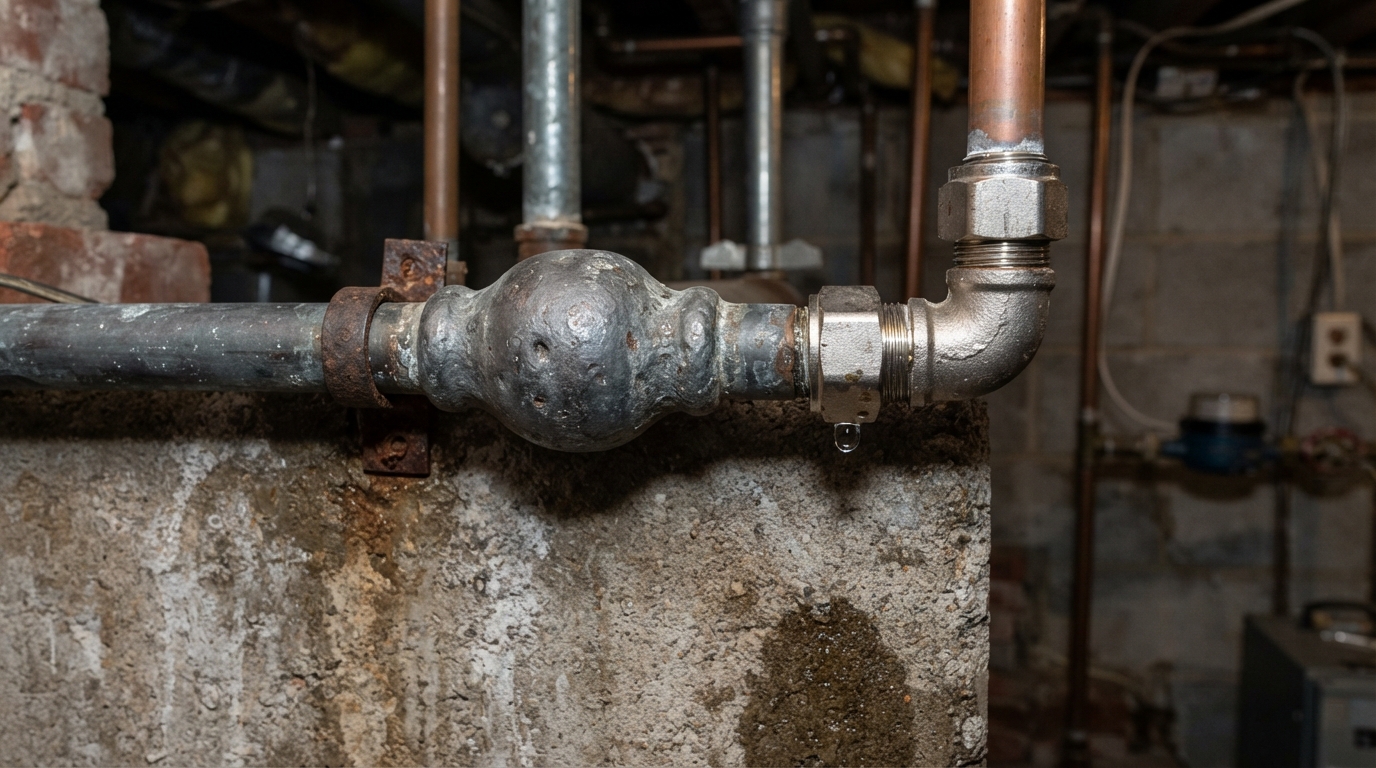
I was inspecting a multi-family property recently, and when I got to the service entrance for the water supply, what I saw stopped me cold.
> "This looks a lot like lead to me. You can tell because of the way it bends - irregularly. Lead is pretty supple, or pliant. And this bulb head is a big clue that what we're looking at is lead."
That bulbous swelling at the joint is a classic tell. Lead pipes were commonly used for water service lines because the metal is soft and easy to work with - which is exactly why it bends in those uneven, organic-looking curves rather than crisp angles. If you see a pipe that looks like it was shaped by hand, with a swollen "bulb" at a connection point, you should take it seriously.
The Health Risks of Lead in Your Water
Lead is a potent neurotoxin. There is **no safe level of lead exposure**, according to the EPA and CDC. When lead leaches from service pipes into your drinking water, the health consequences are serious - especially for children and pregnant women.
Children
Even low levels of lead exposure in children can cause:
- **Brain and nervous system damage**
- **Learning disabilities and reduced IQ**
- **Behavioral problems and attention deficits**
- **Slowed growth and hearing problems**
- **Anemia**
These effects are often permanent. The damage lead does to a developing brain does not reverse when exposure stops.
Adults
In adults, lead exposure is linked to:
- **Cardiovascular disease and high blood pressure**
- **Kidney damage**
- **Reproductive problems**
- **Cognitive decline**
Pregnant women are especially vulnerable because lead stored in bones can be released into the bloodstream during pregnancy, exposing the developing fetus.
How Lead Gets Into Your Water
Lead doesn't come from the water source - it comes from the plumbing. When water sits in lead pipes, especially acidic or corrosive water, lead leaches into the water supply. The longer water sits in the pipes (overnight, for example), the higher the concentration. Hot water dissolves lead faster than cold water.
How to Identify Lead Pipes
Here's what I look for during an inspection:
- **The bend test.** Lead bends irregularly and stays bent. Copper and steel hold their shape.
- **The bulb head.** That swollen joint where the pipe connects is a hallmark of lead work.
- **The color.** Lead pipes are dull gray. If you scratch them with a coin, the scratch mark will be shiny silver.
- **The magnet test.** A magnet will not stick to lead (it also won't stick to copper, but it *will* stick to steel).
- **The age of the home.** If the home was built before 1986, lead service lines and lead solder are a real possibility. The federal ban on lead in plumbing didn't take effect until 1986.
What I Recommended
On this inspection, my recommendation was clear:
> "I'm recommending that the house get its water tested. And to be looked at."
If you suspect lead pipes in a home you're buying or already own, here's what you should do:
1. Test the Water
A certified water quality test will tell you whether lead is leaching into your drinking water. This is not the same as a basic water test - you need a **lead-specific test** from an accredited lab. I offer a Water Quality Test for Public Water as part of my inspection services.
2. Have the Pipes Identified
A plumber or home inspector can help identify whether your service line is lead. In some municipalities, the water utility can also tell you whether the public-side service line is lead.
3. Replace the Pipes
The only permanent solution is to replace the lead service line. This is a significant project, but it eliminates the source of contamination entirely.
4. Use a Certified Filter
Until the pipes are replaced, use an **NSF-certified water filter** rated for lead removal. Look for NSF/ANSI Standard 53 certification. Run your water for 30 seconds to 2 minutes before using it (especially after it has been sitting), and always use cold water for cooking and drinking - never hot.
The Bigger Picture
This wasn't the only issue I found on that inspection. In addition to the lead pipe, there was stainless steel piping (a good sign someone had updated some of the system) and a small leak at a fitting that needed attention. But the lead pipe was the finding that mattered most - not because it's expensive to fix, but because of what it does to the people living in the home.
Lead pipes are not a relic. They're in homes across Connecticut right now. If you're buying a home - especially an older multi-family property - make sure your inspector is checking the water service entrance, not just the fixtures inside.
What to Do Next
If you're buying a home in Connecticut, I can help. My inspections include a thorough evaluation of the plumbing system, and I offer **water quality testing** to check for lead and other contaminants. Schedule your inspection or text me at 203-456-9500 with any questions.
Don't guess when it comes to your family's water. Test it.
Need a Thorough Home Inspection?
Save $20 when you schedule online using promo code SAVE20.
More Articles
Protect Your Pipes from Freezing
Frozen pipes are one of the most common and expensive winter problems homeowners face. Learn how insulation, heat tape, and anti-freeze spigots protect your plumbing.
Different Colors of Mold Explained
Mold can appear in black, green, white, yellow, and purple. Learn what each color means for your home's health and indoor air quality.