Professional Home Inspections for Every Property Type
Whether you're buying a single-family home, a condo, or a multi-family investment property, you get the same thorough, system-by-system evaluation - backed by same-day reports and lifetime support.
Home Inspections
Starting at $475
A thorough, top-to-bottom evaluation of a single-family home - every major system, every accessible component, documented with photos and clear explanations.
- Roof, attic, foundation, and crawlspace
- Electrical, plumbing, HVAC, and water heater
- Interior, exterior, grounds, and grading
- Thermal imaging on every panel and finished area
Condo / Townhome Inspections
Starting at $425
Focused on the interior systems and components you own and are responsible for - while flagging shared structural and exterior concerns that may affect your unit.
- Interior systems: electrical, plumbing, HVAC
- Shared walls, floors, and ceiling concerns
- Balcony, deck, and patio evaluation
- Common-area red flags to discuss with the HOA
Multi-Family Inspections
Starting at $575
Detailed evaluation of properties with multiple units - inspecting each unit's systems individually, plus shared infrastructure like the main electrical service, roof, and foundation.
- Each unit inspected individually
- Shared systems: main panel, roof, foundation
- Common areas, hallways, and stairwells
- Rental-readiness assessment for investors
View My Sample Inspection Reports
Don't just take my word for it. Browse actual reports from real inspections and see the level of detail, clarity, and photo documentation you'll receive. Nothing to hide.
View Sample ReportsWhat's Included in a Typical Home Inspection
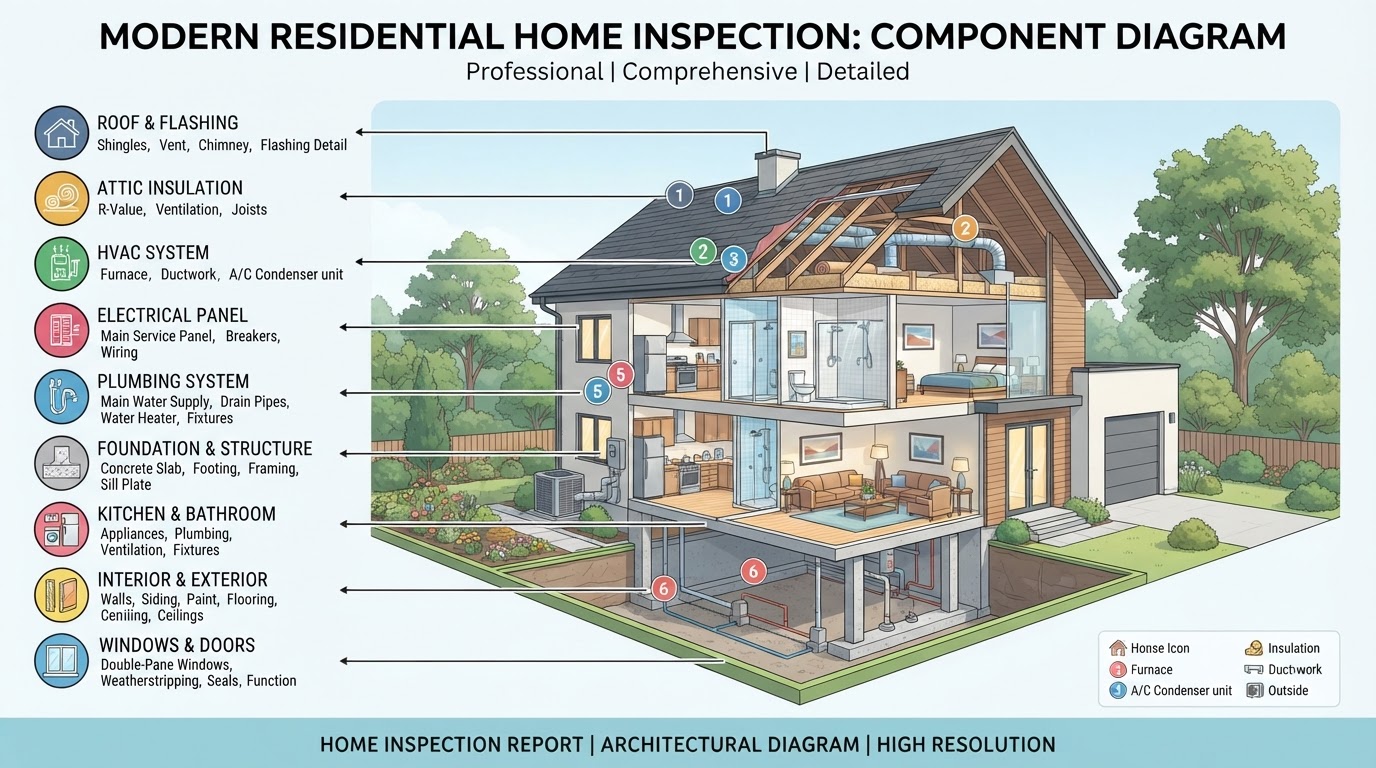
Every inspection follows the same system-by-system approach. Here is exactly what I inspect - from the roof to the foundation and everything in between. No shortcuts, no minimum standards.
Roof & Components
I walk roofs when safe; fly a drone when not. Inspect coverings, flashings, vents, gutters, copings, and chimneys.
Heating & Cooling
Test both systems. Document equipment age/condition. Infrared camera verifies heat delivery. Check fireplace for drafting.
Electrical Systems
Remove dead front panels on every sub-panel. Thermal imaging on every panel. Test outlets, lights, switches. Verify smoke/CO detectors.
Plumbing & Water Heater
Inspect water heater, supply lines, waste lines, sump/ejector pits. Run water at every fixture. Thermal camera checks temperature.
Foundation & Structure
Inspect basements/crawlspaces from interior. Thermal imaging in finished areas. Document cracks, settling, water entry.
Attic & Ventilation
Inspect insulation levels, ventilation, roof framing, and structure. Document any plumbing, heating, or electrical in attic.
Kitchen & Bathroom
Test all faucets/drainage/GFCIs. Check for leaks. Document ventilation. Test appliances. Run full dishwasher cycle.
Interior Areas
Floors, walls, ceilings, stairs, windows, doors, cabinets. Focus on structural and disrepair concerns - not cosmetic.
Water & Moisture
Document water-related anomalies: rot, staining, mold, fungus. Broken down by exterior, interior, roof, and foundation zones.
Structural Movement
Comprehensive reporting on cracks in flatwork, walls, foundation, retaining walls. Identify what needs attention vs. monitoring.
Going Beyond Connecticut Standards of Practice
I also report on environmental concerns including strange odors, pest or rodent activity, and potential asbestos, lead paint, or buried oil tanks - because your family's safety matters more than minimum requirements.
How I Approach Every Inspection
My role is not simply to find defects. It's to help you understand the home you're considering buying - and to give you the information you need to make your own decision with confidence.
I Don't Scare, I Educate
Every home has defects. Finding them is only part of my job. I want to help you understand what those findings mean. Knowledge should leave you better prepared - not more afraid.
I Don't Rush, We Discover
The house determines how long the inspection takes - not my schedule. I spend a minimum of 3 hours on-site, and more if the home requires it. You're welcome to walk with me the entire time.
I Don't Transact, I Build Trust
You have placed your trust in me, and I intend to be faithful to that trust. My report reflects what the home tells me - nothing softened for anyone else's benefit. Plus, lifetime technical support.
Licensed & Insured
Fully licensed Connecticut home inspector.
3+ Hours On-Site
Never rushed. The house sets the pace.
Same-Day Reports
Photo-rich digital report within hours.
How Condo & Multi-Family Inspections Differ
While the core inspection philosophy stays the same, each property type has unique considerations that change what I focus on and how I report.
Condo & Townhome Inspections
With condos and townhomes, the HOA typically owns and maintains the exterior, roof, and structural elements. My inspection focuses on the systems within your unit - electrical, plumbing, HVAC, appliances, and interior components - while flagging any shared-wall or common-area concerns worth raising with the HOA.
- Interior electrical, plumbing, and HVAC
- Built-in appliances and ventilation
- Shared wall soundproofing and fire separation
- Balcony, deck, or patio safety
- Water heater and unit-specific systems
- Red flags to discuss with the HOA
Multi-Family Inspections
Multi-family properties require inspecting each unit individually - every kitchen, bathroom, electrical panel, and HVAC system - while also evaluating the shared infrastructure that serves the entire building. This is especially important for investors assessing rental readiness and future maintenance costs.
- Each unit inspected individually
- Main electrical service and distribution
- Shared roof, foundation, and structure
- Common hallways, stairwells, and exits
- Separate utility meters and shut-offs
- Rental-readiness and deferred maintenance
Add-On Inspections to Complete the Picture
A home inspection covers the major systems - but some concerns require specialized testing. Add any of these services to your inspection for full confidence.
Water Quality Testing
Lab-certified testing for private wells and public water.
Sewer Scope Inspection
HD camera inspection of the main sewer line.
Septic Inspection
Full septic system evaluation - tank, distribution box, drain field.
Radon Testing
Continuous radon monitoring for this invisible, dangerous gas.
Mold & Air Quality
Certified lab analysis of indoor air quality. Three samples included.
Solar Panel Inspection
Certified solar system inspection - the only one in CT.
Termite / WDI
Wood-destroying insect inspection. Fee waived for veterans.
Well Inspection
Complete well system inspection - flow, pressure, equipment.
Ready to Schedule Your Inspection?
Book online and get a thorough, same-day report for any property type in Connecticut.
Use code SAVE20 to save $20 when you schedule online!